Everything Before 2009 Is Disappearing: Inside the Great Streaming Archive Gap

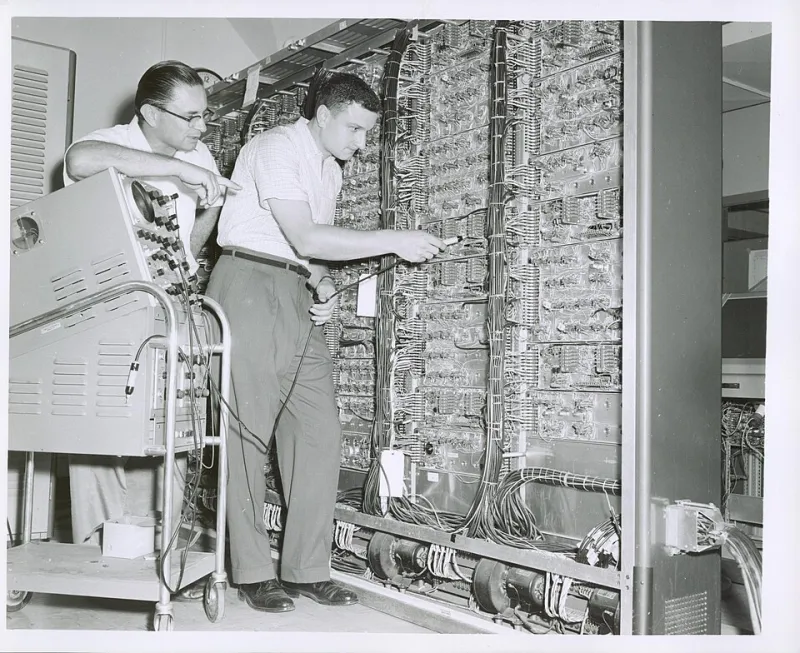
Photo: dave peck, CC BY-SA 2.0, via Wikimedia Commons
Ask a streaming archivist what keeps them up at night and they won't say hard drive failure or a platform shutdown. They'll say a date. Roughly 2009. Before that year, the recorded live internet barely exists. After it, there's more footage than anyone could watch in a lifetime.
That dividing line — the same one baked into our own name here at Stream2009 — isn't a marketing invention. It's a technical reality, and it's why a growing group of hobbyist preservationists are treating old captures like endangered artifacts.
The Codec Problem Nobody Talks About
Streaming before 2009 was a hostage situation between bandwidth and file size. Flash Video at 320x240 was the ceiling for most broadcasters, and the encoders of the era threw away an enormous amount of visual information to hit their bitrates. What survived looks watchable in a thumbnail and like soup at full screen.
But low quality isn't the same as lost. The real problem is that the masters — the full-resolution captures that existed before encoding — were almost never kept. Storage was expensive. A single terabyte drive in 2007 cost more than a decent used car down payment. So streamers recorded over their footage, or dumped it when a drive filled up, or simply let a hosting site go under and take everything with it.
"People treated VODs like phone calls," one archivist who runs a preservation Discord of several thousand members told us. "You didn't keep the tape. You kept the memory. And the memory doesn't seed a torrent."
Justin.tv, Stickam, and the Platforms That Took the Library With Them
The other half of the gap is corporate. The pre-2009 live streaming scene ran on platforms that are now footnotes: Stickam, BlogTV, Ustream's early years, Justin.tv before the gaming pivot. When those services folded — Stickam shut down abruptly in 2013, giving users essentially no notice — the archives went with them.
Contrast that with what happened after. Twitch's rise brought with it a culture of VOD retention, highlight clipping, and third-party backup tools. YouTube's long-form era meant that even casual streamers had a permanent(ish) home for uploads. The infrastructure for keeping things finally caught up to the infrastructure for broadcasting them. That shift didn't happen gradually — it happened in a concentrated window around 2009 to 2011, which is why the cliff edge is so sharp.
The result is a strange asymmetry in internet history. There are more hours of footage from a single mid-tier Twitch streamer in 2019 than survive from the entire live web of 2006.
Racing the Hardware
What does survive from the analog-adjacent era is often trapped on dying media. MiniDV tapes from early capture rigs degrade faster than VHS ever did — the lubricant layer sheds, and each playback pass causes measurable damage. And here's the cruel math: the number of working MiniDV decks in the world shrinks every year, because nobody manufactures them anymore.
"Every deck that dies is a format that gets harder to read," the archivist told us. "We're not just racing the tape. We're racing the tape players."
That's why preservation groups are doing things that sound absurd in 2024: paying shipping to move fragile tapes across the country to whichever member still owns a calibrated deck, ripping captures at degrading quality because a degraded rip beats no rip, and maintaining spreadsheets that track which decks are still functional like military logistics.
Why It Matters That It's This Era Specifically
There's a temptation to shrug — the footage is pixelated, the streamers were mostly unknowns, who cares? But the pre-2009 window is when the grammar of live streaming was invented. The first donation readouts. The first chat-driven gameplay decisions. The first time someone realized an audience would watch a person do nothing in particular for hours. All of that happened in an era we now have almost no primary record of.
Gaming historians have their Dead Space discs and their cartridge dumps. Streaming history has, in many cases, a forum post saying "anyone got the VOD?"
If you've got old captures sitting on a drive in a closet — a DVD-R of a Stickam session, a MiniDV tape from a capture card era, even a folder of .flv files — the archivists' advice is simple. Copy them off the original media. Upload them somewhere with redundancy. Don't wait for the perfect digitization setup, because the hardware clock is running whether you are or not.
The internet forgets on a schedule. 2009 is just when it started remembering.