Five Seconds From Nothing: The Clip Economy That Pays Out at the Buzzer
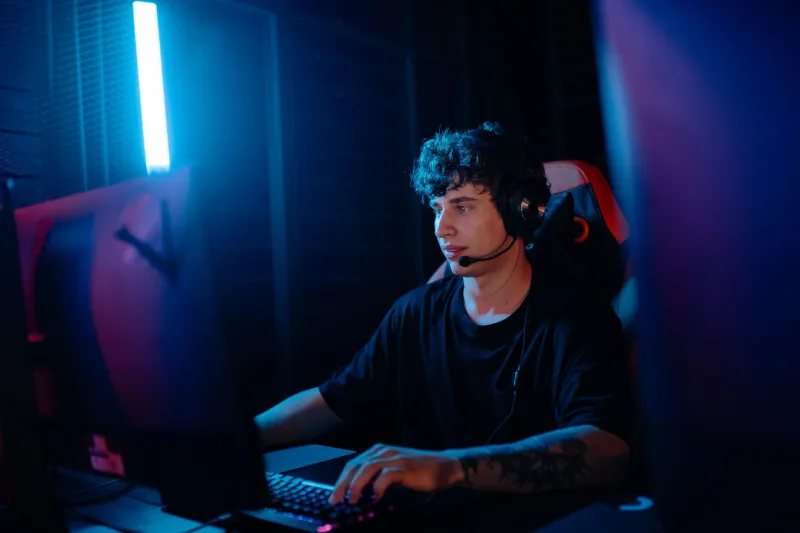
There's a strange math to going viral in 2024, and almost nobody outside the streaming world understands it. A clip's value isn't spread evenly across its runtime. It's compressed, crushed into the tail end like air into a balloon. You can watch forty-five seconds of nothing — dead gameplay, filler banter, a guy staring at a loot screen — and then the last five seconds happen, and suddenly that clip is on every timeline in America.
The industry has a name for this, informally: the buzzer play. Borrowed, obviously, from basketball. And like basketball, the shots that matter most are the ones taken with the clock bleeding out.
The Anatomy of a Last-Second Save
Ask any clipper — the freelance editors who mine hours of livestream for gold — and they'll tell you the same thing: the first ten seconds of a clip determine almost nothing. What matters is whether the payoff lands inside the final stretch, where the viewer's dopamine is still waiting for a reason to stick around.
The famous examples follow a pattern. A streamer is down to their last heal in a battle royale, one enemy left, ring closing. Or a speedrunner is two seconds off world record pace, and the run either dies or enters history in the space of a single frame. The Twitch clip of a streamer clutching a 1v4 doesn't get shared because of the fight — it gets shared because the kill confirm hits with, like, three seconds of footage left. The clip ends on the win. That's not an accident. That's architecture.
There's a reason the most-reposted gaming clips of the last few years all seem to cut to black right at the moment of triumph. An ending on a high note is a loop. A loop is a replay. A replay is an algorithmic signal. And a signal, on platforms that pay out per thousand views, is money.
Engineering the Buzzer
Here's where it gets cynical — or genius, depending on how you feel about the hustle. A growing number of mid-tier and top-tier streamers don't wait for buzzer moments. They build them.
The playbook is well-worn at this point: extend a losing situation deliberately. Delay the resolution. Talk through the tension — "chat, chat, I don't believe this, I do NOT believe this" — because verbal escalation gives editors a natural crescendo to cut to. Some streamers even structure their sessions around it, queueing into high-variance game modes specifically because variance manufactures last-second drama at scale. You can't script a clutch, but you can absolutely farm the conditions for one.
One former clipper I spoke to put it bluntly: "Nobody's clipping the guy who wins comfortably. We're clipping the guy who almost lost everything and didn't. So guess what everyone pretends to do all day?"
The Six-Figure Cutoff
The financial side is where this stops being a fun observation and becomes an economy. A single clip that breaks containment — crossing from a streaming platform onto short-form video feeds — can generate more revenue through subs, sponsorships, and brand deals than a month of regular streaming. There are streamers whose entire careers trace back to one five-second sequence, a moment they nearly slept through.
And the timing of that moment matters almost as much as the content. Clip culture rewards the cut: the frame where the emotion peaks and the video ends. Editors have gotten surgical about it. Trim half a second too early and the payoff feels unearned. Linger too long after the win and the loop dies. The difference between a clip that does 40,000 views and one that does 40 million is, sometimes, six frames.
That's a strange kind of pressure to put on a person who's just trying to play video games on the internet. But it explains why streamers react the way they do in those final seconds — the standing up, the screaming, the headsets flying off. Some of it is genuine. Some of it is a performer who knows exactly where the camera's eye is cutting.
The Counterfeit Clutch Problem
Of course, when the payout is that lopsided, people cheat. Fake clutches — staged matches, hired opponents, edited health bars — have become a quiet scandal in streaming circles. Viewers have gotten savvier about spotting them: too-clean aim, opponents who fight in ways no real player would, a comeback that unfolds with suspicious cinematic timing.
The platforms, for their part, mostly shrug. Staged content isn't against the rules the way aimbots are. It's just a little sad — a reminder that the buzzer-beater, the purest form of unscripted drama the internet produces, is now valuable enough to counterfeit.
Which might be the real story. We used to celebrate the last-second win because it was the one thing nobody could fake. Now it's a content strategy with a ROI. The clock still runs out the same way it always did. It's just that more people than ever are watching it, timing it, and waiting to cash in the second it hits zero.