You Bought It, But You Don't Own It: The 30-Day Clock Quietly Deleting Your Game Library
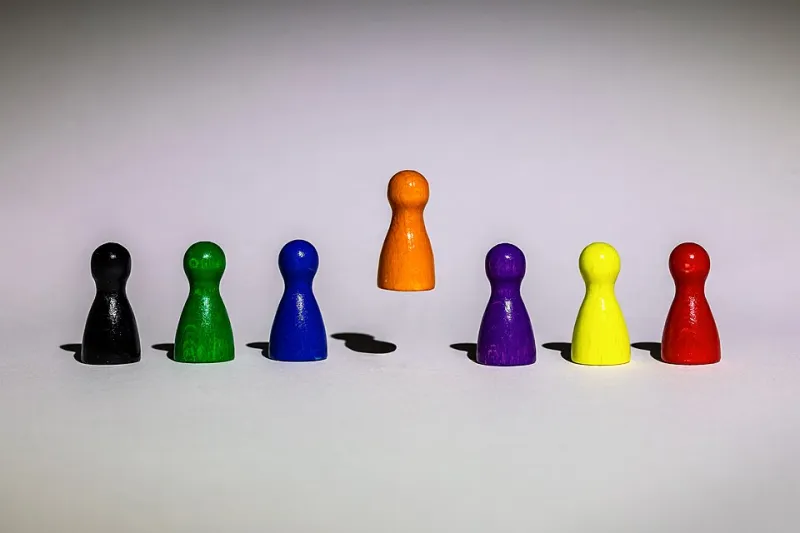
Photo: Dietmar Rabich, CC BY-SA 4.0, via Wikimedia Commons
You bought the game. You downloaded it. You played maybe six hours of it over a weekend, told yourself you'd get back to it, and then life happened. A month later, you pull up your library to finally give it a real run — and it's gone. Not hidden. Not moved. Gone.
This isn't a glitch. It's a system working exactly as designed.
Digital storefronts have quietly normalized a practice that would cause absolute chaos if it happened at a physical retailer: the post-purchase expiration. Under specific licensing conditions — particularly common with third-party publishers, movie tie-in games, and certain indie titles distributed through larger platforms — the access rights attached to your purchase can and do expire. Sometimes at 30 days. Sometimes at 90. Sometimes the moment a licensing deal between a developer and a platform quietly lapses.
And most players have no idea this is even possible until they're staring at an empty slot where their game used to be.
The License Is the Product, Not the Game
Here's the thing that shifts how you think about all of this: when you buy a digital game, you're not purchasing software the way you'd buy a hammer or a pair of jeans. You're purchasing a license — a revocable permission slip that lets you access that software under conditions set by the publisher, the platform, and sometimes a third-party IP holder sitting behind both of them.
That distinction sounds like legal fine print, and it is. But it has real consequences.
When a game's publishing rights change hands, when a licensing deal between a developer and a music label expires, or when a platform renegotiates its distribution terms with a third party, the backend systems that authenticate your access can be updated to reflect the new reality of who owns what. Your purchase receipt means you paid for access. It doesn't always mean that access is permanent.
Jordan Teff, an indie developer who released a licensed puzzle title through a mid-tier digital marketplace in 2021, described the experience from the other side of the counter. "We had a content licensing agreement with a third party for some of the visual assets in the game," he explained. "When that agreement hit its renewal window and we couldn't close the new deal fast enough, the platform flagged the title automatically. Players who bought it during that window lost access within weeks. We didn't even get a notification that it was happening until after the fact."
Teff says he eventually resolved the licensing situation and the game was restored, but for a stretch of roughly six weeks, those players were just out of luck.
The 30-Day Window Isn't Arbitrary
So why does 30 days keep coming up as the magic number? It's not random.
Many platform-level licensing agreements operate on monthly billing and renewal cycles. When a publisher or developer licenses content — a soundtrack, a real-world sports league's branding, a film IP — the terms are often structured in 30-day increments tied to active distribution rights. If a renewal lapses or a dispute arises, the platform's backend systems are built to respond on that same cycle.
There's also a consumer protection angle that platforms quietly lean on. By setting a 30-day window as the standard grace period for disputed or expiring content, platforms can technically argue they gave users time to "use" the product before access was affected. Whether that argument holds water legally is another conversation — and one that's starting to get louder.
A 2023 class action filing in California targeted a major digital storefront over exactly this issue, alleging that the platform's licensing expiration practices constituted unfair business conduct under state consumer protection law. The case is still working through the courts, but it signals that players are starting to push back.
What the Storefront Disclosures Actually Say
If you've ever clicked "I agree" on a platform's terms of service without reading it — and let's be honest, almost everyone has — you've probably already agreed to language that explicitly covers this. Most major storefronts include clauses that outline their right to remove content from your library under specific conditions, usually buried several pages deep under headings like "License Limitations" or "Content Availability."
Steam, for example, includes language noting that access to content may be affected by third-party rights holders. The PlayStation Store and Xbox platforms have similar provisions. The language varies, but the underlying framework is consistent: the platform is a distributor, not a guarantor of permanent access.
What's less consistent is how platforms communicate this to buyers at the point of purchase. A game that carries a hidden expiration condition due to a licensing arrangement rarely has that information displayed prominently on its store page. You're more likely to find it if you go digging through a developer's FAQ or a Reddit thread from someone who already lost access.
Indie Developers Are Caught in the Middle
For smaller studios, navigating this landscape is genuinely brutal. Many indie developers don't have dedicated legal teams reviewing every clause in their distribution agreements, and the consequences of missing a renewal window can fall entirely on their players.
Marcela Okonkwo, who runs a two-person studio out of Austin, described the anxiety of releasing a game that uses licensed music. "Every song in our soundtrack is licensed from a third-party library service," she said. "We pay a subscription for that license. If we ever miss a payment or that service changes its terms, technically our distribution rights could be affected. I think about it constantly. Our players have no idea that's even a variable."
She's now exploring releasing future titles with original music specifically to avoid that dependency — a creative decision driven entirely by backend infrastructure anxiety.
What You Can Actually Do About It
There's no perfect solution here, but there are things worth doing before you buy.
First, check whether a game uses licensed third-party content — music, sports branding, real-world vehicles, anything tied to an external IP. These are the titles most likely to carry hidden expiration risk. If a game has already been delisted once and re-released, that's a major flag.
Second, if a game matters to you and a physical edition exists, buy it. Physical media is far from immune to issues, but a disc-based game doesn't rely on a backend server to authenticate your access in the same way a digital license does.
Third, stay aware of what's in your library. Platforms don't always send notifications when content is removed. Periodically checking your purchased games list — especially for older or niche titles — is the only reliable way to catch a removal before you need the game.
The digital storefront era promised convenience and permanence. It delivered the first part pretty well. The second part is still very much a work in progress — and the clock is always running somewhere in the background, whether you can see it or not.