Dead of Night Deployments: The Real Reason Your Favorite Game Updates While You Sleep

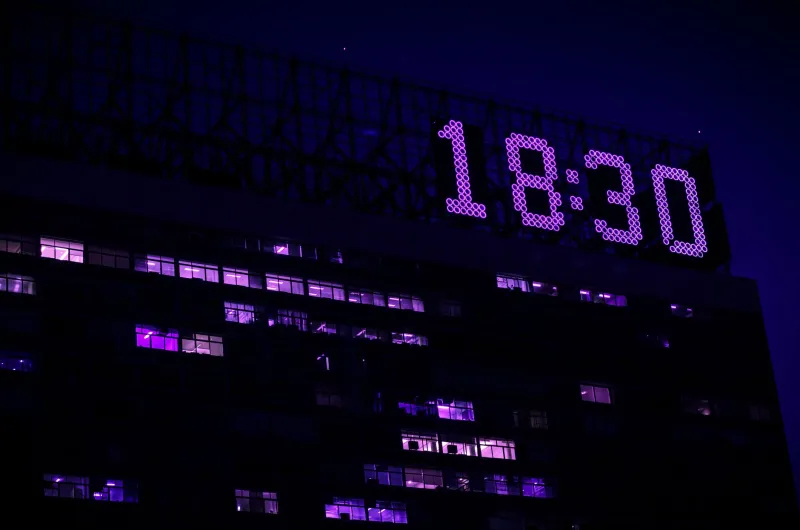
Photo by Photo by reyna on Unsplash on Unsplash
You wake up, grab your phone, open your game, and boom — something's different. A weapon got nerfed. A map changed. That character you've been grinding for weeks just had their core ability quietly reworked. The patch notes are already live, the forums are already on fire, and the update itself has been sitting on your console for hours. You never saw it coming because, well, you were asleep.
That's not a coincidence. That's a strategy.
The Timestamp Tells the Story
If you start tracking when major game updates actually hit servers — not when they're announced, but when they deploy — a pattern shows up fast. A huge chunk of significant patches, balance overhauls, and content drops land somewhere between midnight and 5 AM Eastern. For studios based on the West Coast, that's still the middle of the night locally. For studios in Europe or Asia publishing to US audiences, the math gets even more intentional.
Stream2009 pulled patch history data across several major live-service titles over the past year and cross-referenced deployment timestamps with announcement windows. The gap between "we're dropping this soon" and "it's already on your system" is frequently measured in the early morning hours, long after US prime-time traffic peaks.
So what's actually driving that scheduling decision? Turns out, it's not just one thing.
Server Load Is the Obvious Answer — But It's Not the Whole Answer
The first explanation any developer PR team will hand you is infrastructure. Midnight deployments mean fewer concurrent players online, which means lower server load during the critical window when a patch is being pushed globally. That logic holds up. Rolling out a massive content update while 400,000 players are actively in-game is a technical nightmare. Doing it at 3 AM Eastern — when US player counts are at their daily floor — gives engineers breathing room.
But here's the thing: server load management doesn't explain why studios also choose that window for their most controversial changes. Balance patches that gut popular meta builds. Economy tweaks that quietly reduce drop rates. Paid content restructuring that makes previously free systems cost real money. Those aren't infrastructure decisions. Those are narrative decisions.
Controlling the Conversation Before It Starts
When a studio pushes a controversial update at midnight, they're essentially getting a six-to-eight hour head start on the community response. By the time East Coast players wake up and start logging in around 7 or 8 AM, the update has already been live for hours. The most vocal players — the ones who would've been online during a prime-time rollout, screaming in real-time — missed the moment of impact. The patch is already a done deal.
Social media outrage still happens, obviously. Reddit threads still blow up. But there's a measurable difference between a community reacting as something happens versus reacting to something that already happened. Real-time anger has momentum. Morning-after anger has already started cooling by the time most players are even aware there's something to be mad about.
Industry observers have noted this pattern for years, but it rarely gets called out directly. Studios benefit from the ambiguity — they can always fall back on the infrastructure argument, and that argument isn't even wrong. It just isn't the complete picture.
The Time Zone Shuffle
For US players specifically, the midnight drop creates an interesting regional divide. If a patch hits at 12:01 AM Pacific, that's already 3 AM Eastern. West Coast night owls might catch it live; everyone east of the Rockies almost certainly won't. That means the players most likely to encounter the update first are a relatively small slice of the overall audience — often the hardcore community members who keep unusual hours.
Those players become the de facto first responders. They're the ones writing the initial patch notes breakdowns, the early Reddit reactions, the first YouTube videos. By the time the broader US audience logs on, the framing has already been set by a handful of people who happened to be awake. Studios know this. The early community interpreters often shape whether a patch lands as "reasonable adjustment" or "they ruined everything."
Some studios have quietly cultivated relationships with prominent community members who tend toward measured, analytical takes — ensuring that the first voices interpreting a midnight drop are ones likely to present changes in a favorable light.
When the Timing Itself Becomes the Story
Occasionally, the midnight deployment strategy backfires. If a patch causes a significant bug, a progression wipe, or an unintended exploit that players can immediately farm, the overnight window actually makes things worse. Support staff are running skeleton crews. Community managers aren't monitoring. By the time anyone with authority is awake to respond, thousands of players have already hit the bug, clipped it, and posted it everywhere.
There are documented cases of studios scrambling to roll back patches on weekend mornings because a midnight Friday deployment went sideways and nobody caught it until Saturday brunch. The same quiet hours that help control narrative during a smooth rollout can accelerate damage during a rough one.
What Players Can Actually Do With This
Knowing the pattern is useful. If you're playing a live-service game and you care about staying ahead of meta shifts, setting up patch note alerts through community Discord servers or subreddits is worth the setup time. A lot of dedicated communities have bots that ping members the moment official patch notes go live — which often happens before the actual deployment, sometimes by only 30 to 60 minutes.
For competitive players, those minutes matter. Getting a read on balance changes before you queue into a ranked session can be the difference between playing into a dead strategy and adapting early.
For everyone else, the takeaway is simpler: the timestamp on your game update isn't random. Someone chose it. And understanding why they chose it tells you something real about how these studios think about their relationship with you as a player — not just as a user to be served, but as an audience to be managed.
The Clock Is Part of the Product
Live-service games are timestamp-driven experiences by design. Events start and end on schedules. Seasons flip at specific moments. Ranked resets happen at times calibrated for maximum impact. The midnight patch drop is just another layer of that same temporal architecture — a scheduled moment that serves the studio's interests first and the player's interests second.
None of this makes game development villainous. Balancing a live game with millions of players is genuinely hard, and the infrastructure arguments are real. But the next time you wake up to find your game has changed overnight, it's worth sitting with the fact that someone, somewhere, deliberately picked that hour. The question worth asking isn't just what changed — it's why they waited until you were asleep to change it.